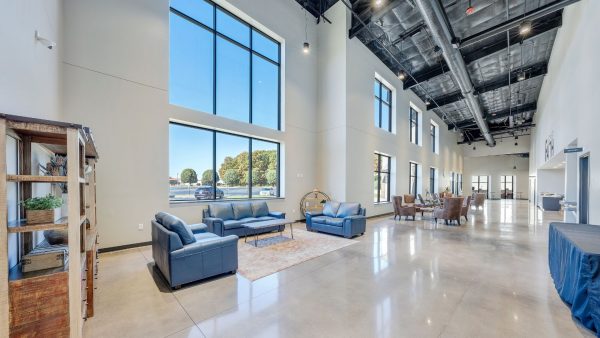
The design-build church construction process follows four phases: (1) Consultation & Needs Assessment — listening to your ministry vision and goals before any drawings; (2) Scope & Budget — replacing assumptions with data-driven planning and real construction costs; (3) Design, Permitting & Construction — managing the entire build under one coordinated team; and (4) Completion & Ministry Expansion — stepping into a space built to serve worship and community. Bringing in the right design-build partner early saves time and money through value engineering and gives church leaders peace of mind to focus on ministry.
Table of Contents
Church construction can feel overwhelming, especially when you’re trying to balance vision, budget, timing, and ministry needs all at once. At Churches by Daniels, we believe clarity brings confidence. While every project is unique, most successful design-build church projects follow four foundational phases that help create alignment, reduce risk, and protect your church’s resources.
Phase One: Consultation & Needs Assessment
Every strong project begins with listening. The first phase is a consultation with your design-build partner to complete a thorough needs assessment. This step focuses on understanding your ministry vision, growth goals, site considerations, and existing challenges. It’s not about drawings or square footage yet, it’s about asking the right questions early so that the facility ultimately serves the mission of the church, not the other way around.
Typically this phase involves your pastor, key lay leaders, and a building committee meeting with the design-build team. Getting the right voices in the room early, those who understand both the ministry vision and the practical realities of the congregation, prevents misalignment that becomes expensive to fix later.
Phase Two: Establishing an Accurate Scope & Budget
Once vision and needs are clear, the next step is defining an accurate project scope and a realistic budget. This phase removes assumptions and replaces them with data-driven planning. By engaging a design-build partner early, churches gain access to real construction costs, value engineering opportunities, and strategic guidance that helps prevent costly surprises later in the process.
This is also where many churches first confront the gap between their wish list and their funding. A good partner helps you prioritize, identifying what must be built now versus what can be phased in over time, so the project moves forward without overextending the congregation financially.
Phase Three: Design, Permitting & Construction
This is where complexity often peaks, and where having the right partner makes the biggest difference. During this phase, your design-build team manages architectural design, permitting, procurement, and construction under one coordinated process. Challenges will arise, but with consistent communication, ownership, and experienced leadership, they can be navigated efficiently while protecting the schedule and budget.
The single-team advantage matters most here. In a traditional design-bid-build model, the architect and the builder are separate contracts, and gaps between them become the church’s problem. Under design-build, one team owns design and construction together, which streamlines decisions and keeps accountability in one place.
Phase Four: Project Completion & Ministry Expansion
The final phase is more than a ribbon cutting, it’s stepping into a space intentionally designed to support worship, discipleship, and community impact. With construction complete, your team can focus fully on expanding ministry, welcoming people, and stewarding the facility for years to come.
A thorough partner doesn’t disappear at handoff. Walkthroughs, warranty support, and guidance on operating the new space help your team transition smoothly from building to ministry.
Why the Right Partner Matters
Now, let’s be honest, while the process can be outlined simply, it is rarely easy. Church construction takes time, tenacity, and careful coordination. Finding the right design-build partner early allows for smarter decisions, time and cost savings through value engineering and pre-purchasing materials, and peace of mind knowing the burden of construction is being carried out by a trusted team.
At Churches by Daniels, our goal is to walk alongside pastors and church leaders with honesty and integrity, consistency, tenacity, ownership, and excellence so you’re free to do what you do best: lead and grow your ministry.
Frequently Asked Questions
What is design-build church construction?
Design-build is a project delivery method where one team handles both the design and the construction of your church under a single contract. This contrasts with the traditional design-bid-build approach, where the architect and contractor are hired separately. Design-build streamlines communication, keeps accountability in one place, and typically saves time and money.
How long does church construction take?
Timelines vary widely based on size, scope, site conditions, and permitting. Smaller renovations may take a few months, while a full new building commonly runs 12–24 months from initial design through completion. Engaging a design-build partner early in the planning phase helps establish a realistic timeline and avoid delays.
How much does it cost to build a church?
Church construction costs depend heavily on square footage, location, materials, and finishes, so there’s no single answer. The most accurate path is a needs assessment and scope-and-budget phase, where a design-build partner provides real construction costs and value engineering options specific to your project rather than rough estimates.
What is value engineering in church construction?
Value engineering is the process of finding cost savings without sacrificing quality or function, for example, adjusting materials, construction methods, or phasing. Bringing a design-build partner in early lets your church capture these savings and pre-purchase materials before prices rise.
Start Your Church Construction Project
No church should have to navigate this journey alone, and having the right design-build partner can make all the difference. Schedule a consultation with the Churches by Daniels team to begin your needs assessment, or explore our completed church projects to see the process in action.
If you know a pastor considering a construction project, share this with them.