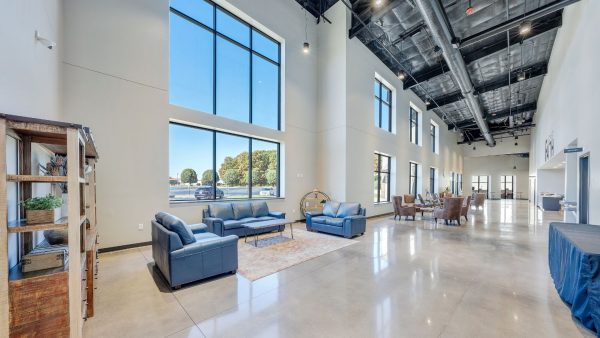
If your church is thinking about renovations or expansion, start with planning, not construction. Many churches find they can accomplish more by rethinking what they already have. A master plan helps leaders move forward with confidence, sidestep costly mistakes, and ensure every dollar spent advances ministry. Read on for a clear-eyed look at how to approach your next facility project.
Table of Contents
If you’ve walked through your church building lately and quietly thought, we need to do something, you’re not alone. Cramped lobbies, outdated children’s areas, classrooms that don’t fit how your ministry operates anymore: these are real constraints that church leaders navigate every week. Planning a meaningful facility improvement doesn’t have to mean a massive construction project. It starts with asking the right questions.
What Church Renovation Actually Looks Like
One of the most common misconceptions in church facility planning is that improvement means adding a building or launching a multi-million-dollar capital campaign. For some congregations, that’s exactly the right call. But many churches discover they can create significant ministry impact simply by looking harder at what they already have.
Rethinking classroom layouts, opening up underutilized gathering spaces, and modernizing key areas often accomplish more than adding square footage. Churches that work through this kind of evaluation regularly find capacity they didn’t know existed, and ministry opportunities their current setup was quietly preventing.
Your facility should never be a barrier to what God is calling your church to do. When evaluated strategically, existing space can be reshaped to welcome guests, support growing ministries, and reflect the vision your leadership is pursuing.
Planning a Church Facility Project in Today’s Environment
Construction looks different today than it did just a few years ago. Rising material costs, labor shortages, and economic uncertainty have raised the stakes on every decision a church makes about its building. A project that moves forward without adequate preparation can exceed budget quickly, take longer than expected, and produce results that don’t align with long-term ministry needs.
The churches that navigate projects most successfully aren’t necessarily the ones with the largest budgets. They’re the ones that take time to evaluate their current facilities honestly, ask hard questions before breaking ground, and develop a shared vision for where they want to be five to ten years from now. Planning isn’t a delay to getting started. It’s how you avoid the costly corrections that derail projects down the road.
Why a Church Master Plan Changes Everything
A master plan is one of the most practical investments a church can make, whether renovation is on the horizon next year or five years from now. It maps out which improvements should come first, how different phases build on one another, and how decisions made today will affect future options.
With more than 45 years of experience working with ministry clients, Churches by Daniels has seen churches avoid significant and expensive mistakes simply by investing in planning before picking up a hammer. A clear master plan means leadership moves forward with confidence rather than reacting to problems as they surface. Every improvement connects to a larger vision instead of standing alone as a reaction to a specific pain point.
Designing Church Spaces That Serve Ministry All Week
The way churches think about their facilities has shifted. A beautiful sanctuary still matters, but today’s ministry environments are built to serve congregations throughout the entire week, not just Sunday mornings.
Welcoming lobbies encourage conversations after services. Flexible meeting rooms support Bible studies, counseling, and community events. Children’s areas are designed with both security and engagement in mind. Technology is integrated to enhance worship rather than compete with it. Every space has a purpose, and every purpose should support the specific ministry your congregation is called to.
The question isn’t whether your church building looks good. It’s whether your current facility actively supports the full range of ministry you’re called to offer. A thoughtful renovation or reconfiguration plan answers that question with intention.
Stewardship as the Foundation of Every Facility Decision
Every dollar a church spends on its facility should advance its mission. That’s the lens that separates strategic building projects from costly ones.
This isn’t about chasing trends or building bigger for the sake of appearances. It’s about creating environments where people can encounter Christ, strengthen community, and grow in their faith, then positioning the congregation for whatever God has planned next. Stewardship-driven planning requires intentionality at every stage, from the first conversation through the final walkthrough. The result isn’t just a better building. It’s a stronger foundation for ministry that lasts.
Ready to Start the Conversation?
If your leadership team has been asking what comes next for your church facility, the most important step is simply starting the conversation. Walk your campus with fresh eyes. Note what’s working, what isn’t, and where your building may be limiting what your ministry can do.
Churches by Daniels has spent more than 45 years partnering with ministry leaders to create environments that serve congregations today and prepare for what’s ahead. Schedule a free consultation today to take the first step.